
A paint code or formula is a starting point, not a promise of an invisible repair. A practical match combines vehicle evidence, a formula or scan, spray-out comparison and an experienced look at the actual finish.
A code starts the process, not the conclusion
Automotive color matching combines vehicle information, formula research, physical comparison and application judgment. A paint code identifies a family of colors, but the code alone does not describe how an older panel has weathered or how a previous repair was applied. The useful goal is not simply to find a number that looks similar on a screen. It is to identify a workable color and finish plan for the actual panel, surrounding paint and repair scope.
Begin by deciding what must match. A small removable part, one repaired panel and a complete exterior repaint may need different strategies. Record the year, make, model, code if known, repair location, adjacent panels and whether the surrounding finish appears original. That context helps separate a formula question from a surface, blending or application question.
Paint codes and factory variants
Manufacturers commonly associate a code with a color family, but a family may have more than one production variant. Variants can reflect pigment availability, production changes or differences in how a color was intended to appear. A label can therefore be accurate while a single formula is not the closest visual choice for every vehicle wearing that code.
Look for the complete label rather than copying only a familiar color name. Photograph the label clearly, preserve punctuation and note whether other codes identify trim, interior or a different finish. A VIN can help identify a vehicle, but it is not automatically a paint formula. If the code is missing or doubtful, a clean physical component can provide useful evidence.
Formula tools and spectrophotometers
Formula databases organize available mixing information, while a spectrophotometer can measure reflected light from a prepared sample and suggest related formulas. Neither tool sees the entire repair decision. A scanner can be affected by dirt, curvature, damage, gloss, surrounding color and the portion of paint selected. A formula also needs to belong to a compatible product system and intended use.
Treat a scan as evidence to interpret, not an automatic verdict. Clean an appropriate sample without damaging it, document its location and compare the result with the surrounding finish. The person evaluating the formula still needs to consider age, variant, film, orientation, ground coat, sheen and whether the color will be blended. Exact mixing, reduction, safety and application instructions must come from the current manufacturer documentation.
Why spray-outs matter
A spray-out is a test application on a small card or suitable panel. It shows more than a digital swatch because it includes the chosen system, ground coat, application method and finish. For metallic, pearl or other effect colors, the way particles settle can change the apparent color. A test can reveal that a formula is too light, dark, warm, cool, coarse or fine before the vehicle is committed.
Label the test with the formula or variant, ground coat and relevant process notes. Compare it beside the vehicle in more than one useful light and from more than one direction. Keep the comparison fair: a glossy new test against a chalked panel is not the same as a cured finish against a cured finish. If the project is sensitive, make the test part of the decision rather than treating it as decoration.
Fading, blending and effect colors
Sun, weather, washing and age can change the surrounding finish while the original code remains unchanged. Previous repairs may have introduced another variant or a different ground coat. Metallic and pearl colors add orientation: particles reflect differently when passes, overlap, distance or movement change. Two applications using the same formula can therefore look different from different angles.
Blending may soften a transition when the panel, color, system and repair allow it, but blending is not a substitute for sound preparation or a compatible system. Decide where the color will be judged, how adjacent panels relate and whether the surrounding clear or sheen has also changed. The selected manufacturer’s technical data controls exact process details, recoat windows and safety requirements.
What to prepare before a match
Bring the vehicle information, code label photographs, VIN if useful, repair description and photos taken in neutral light. A fuel door, mirror, trim piece or other removable painted component can be more useful than a phone photograph when it is safe and appropriate to bring one. Explain whether the goal is a factory-like repair, a close touch-up, a restoration decision or a custom color.
Also bring any previous product labels, formula notes, spray-out cards and information about repairs. Ask what should be tested, how the sample will be compared and whether the surrounding finish changes the repair plan. A careful match has limits: screens, names and codes cannot guarantee an invisible result. Use current technical and safety documentation for the selected products, and ask a qualified paint specialist when the evidence conflicts.
The evaluator is part of the process
Color tools make the search more informed, but a person still has to interpret the evidence and decide whether a candidate works for the repair. That evaluation includes the sample’s condition, the vehicle’s surrounding finish, the color effect and the way the panel will be viewed. A formula that measures well may still need a closer visual comparison before it is accepted.
This is why useful color matching is a conversation rather than a vending-machine lookup. Bring the real question, preserve the physical evidence and allow time for a test when the repair is sensitive. If a result remains uncertain, the honest next step may be more inspection or a different repair plan, not a promise based on incomplete information.
A practical sequence
- 01
Define the project before selecting a product. Describe whether this is a repair, full repaint, restoration, exterior maintenance job or industrial item, and identify what area is actually included.
- 02
Inspect the existing surface in useful light. Record substrate, coating condition, contamination, repairs, moisture, corrosion, texture and any unknown layers. Photos are helpful, but a physical sample can answer questions a screen cannot.
- 03
Choose the system as a group. Preparation, primer or sealer, color or topcoat, clear where applicable, reducer or activator and application equipment must be compatible. Current manufacturer technical information controls exact mix, recoat, cure and safety details.
- 04
Test the plan before committing when color, effect, adhesion or finish is sensitive. A small prepared area or spray-out can reveal coverage, orientation, sheen and transitions while changes are still manageable.
- 05
Document what worked. Keep labels, color information, batch or formula notes, application observations and the conditions. A future repair is easier when the next person has evidence instead of a guess.
Common mistakes
- Buying a color before checking the substrate and existing coating.
- Treating a code, color name or internet photo as proof of a final visual match.
- Assuming one primer, reducer, nozzle or coat count fits every product.
- Applying over peeling, contaminated, damp or unknown material.
- Rushing the final inspection because the surface looks dry.
Professional considerations
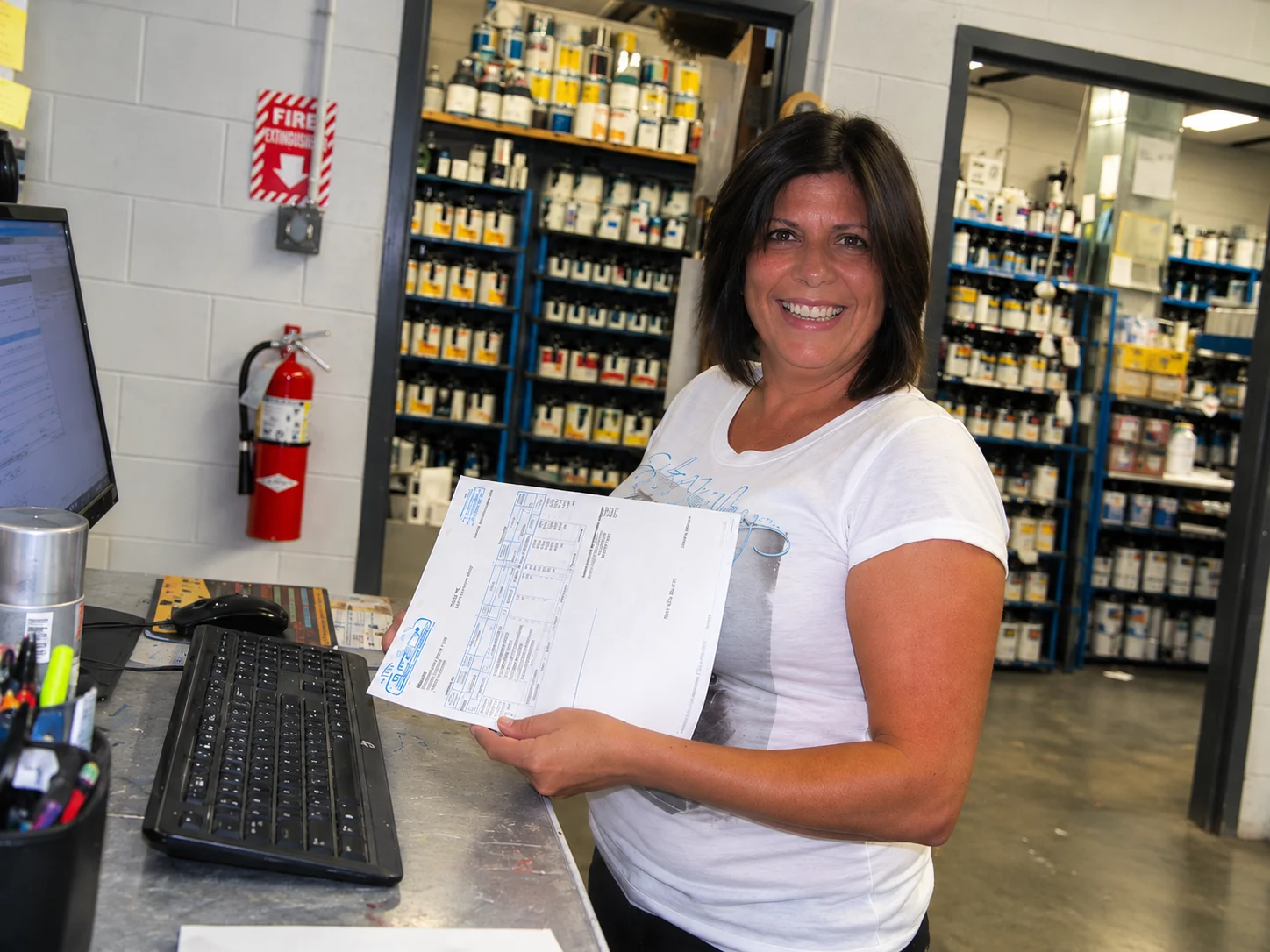
A color specialist balances the formula with what the finished color is likely to look like on the project. Eric has developed a reputation for understanding something a computer formula alone cannot always solve: what the finished color is actually going to look like. A good color matcher is a little like a good chef. The formula matters, but experience tells you when something needs an adjustment.
Professionals also protect the next decision. They keep labels and project notes, test a small area when the result is sensitive, and stop when the substrate or material is not understood. If the work involves hazardous coatings, poor ventilation, unknown contamination or a condition outside the product data, get qualified help rather than improvising.
What to bring to D&S
- Paint code and all label photos
- VIN if it helps identify the vehicle
- Fuel door, mirror or small removable painted panel
- Photos of the repair and surrounding finish
- Previous paint information, if known
Pueblo / Southern Colorado consideration
In Pueblo, strong sun, dry air and dust can make age, fading and application differences more visible. Compare a sample in useful light and keep the work area controlled. Exact application and product conditions belong to the current technical data.
Local context is useful, but it does not override the selected product’s technical data or safety information. Conditions should be observed on the actual day and surface, especially when wind, dust, sun, temperature or low humidity can change the work.
Frequently asked questions
Can I use this guide as a product specification?
No. It is a planning guide. The current technical data and safety information for the exact product and use control the work.
What if I do not know what is already on the surface?
Say that clearly. Unknown layers are important information; a small test and an in-person evaluation are safer than assuming compatibility.
Does weather change the plan?
Yes. Temperature, wind, dust, humidity and surface condition can change application and cure. Use the selected system’s limits and ask D&S when conditions are uncertain.
Published by D&S Paint Center, Inc. · © 2026 D&S Paint Center. All rights reserved.
Bring the project to D&S.
Bring the photos, product labels, dimensions or physical sample relevant to this question. The Pueblo counter can help discuss a practical next step.