
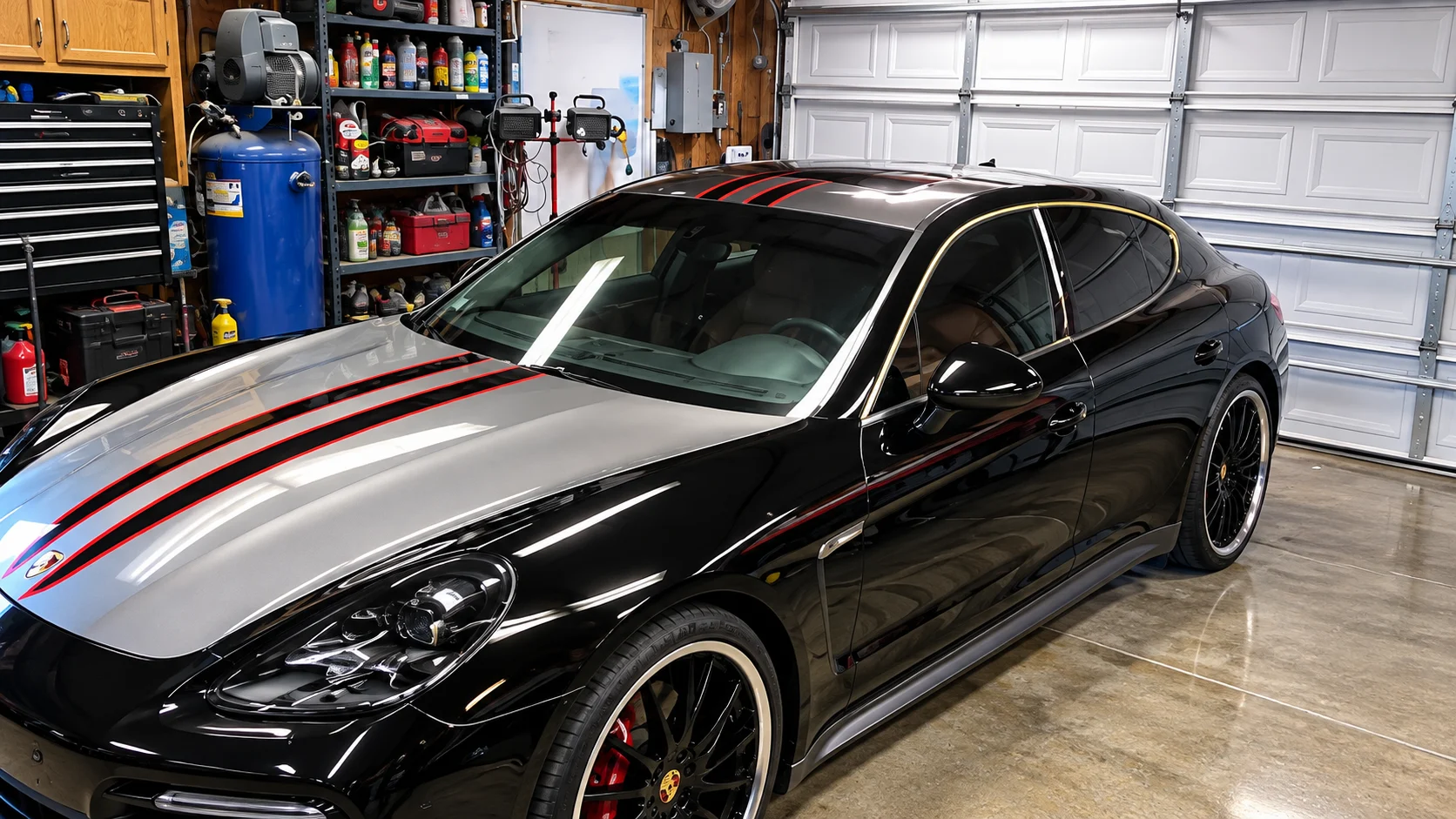
A car paint project needs a complete system and a safe work plan: cleaning, abrasives, repair materials, primer, color, clear or another finish, equipment, masking and personal protection. The exact list depends on the condition and desired result.
Plan a system, not a shopping cart
Painting a car requires more than color and clear. The practical supply list follows the scope, existing finish, substrate, repair condition, chosen coating system and application method. A single-panel repair may need different materials from a full exterior repaint, restoration or color change. Start by defining which panels, edges, jambs, trunk areas or engine-bay surfaces are included.
Write down the desired result: a localized repair, factory-like color match, durable daily finish, restoration direction or custom appearance. Note the current coating, rust, filler, peeling clear, unknown layers and previous repairs. This prevents buying a product that solves the wrong problem. Exact compatibility, mix, flash, cure, recoat and safety requirements belong to the current manufacturer documentation.
Cleaning, repair and preparation supplies
Preparation commonly includes suitable cleaners, lint-free wipes, abrasives for different stages, sanding blocks or tools, repair materials where needed and dust-control supplies. Choose preparation materials around the substrate and existing coating rather than assuming one abrasive or cleaner fits the entire car. Contamination such as wax, silicone, oil and polish can create defects even when the surface looks clean.
Damage and corrosion must be addressed before the finish system is chosen. Filler, surfacer, primer or sealer may each have a different role, and not every repair material belongs beneath every topcoat. Inspect edges and transitions under useful light. Loose paint, dampness, active rust and unknown layers are reasons to pause and investigate, not surfaces to conceal with more product.
Primer, color and finish materials
Primer selection depends on metal or plastic type, repair materials, existing coating, desired surfacing and topcoat compatibility. Some systems use primer for adhesion, surfacing, sealing or corrosion control; those roles should not be treated as interchangeable. Color may be a basecoat, single-stage or another system, and metallic or pearl colors can add ground-coat and orientation decisions.
A clear coat, activator, hardener or reducer may be part of a chosen system, but only when that system calls for it. Do not mix components by color name, habit or an internet ratio. Keep labels together and check whether products are intended to work as a system. Product-specific application and recoat instructions always outrank this general list.
Masking, application and cleanup
Masking supplies can include tape, paper, film, plastic, masking tools and materials for protecting adjacent panels, glass, trim and the work area. Plan where overspray may travel and whether edges will be removed, blended or refinished. Clean masking is part of finish quality; a hurried boundary can create more repair work than it saves.
Application supplies may include a compatible spray gun or approved format, cups, strainers, mixing tools, hoses, filters, regulators and cleaning materials. Equipment must match the coating and available air or power. Test pattern and flow on a suitable card when the system allows. Clean equipment according to its instructions and dispose of contaminated materials safely.
Safety and work-area planning
A vehicle project needs a safe, controlled work area with ventilation appropriate to the selected material, protection from ignition sources, dust control and personal protection selected from the product safety information. A hobby garage is not automatically a suitable spray environment. The label and safety data for the exact coating should determine respiratory, skin, eye, ventilation and disposal requirements.
Plan lighting and access before mixing. Strong wind, dust, temperature changes and uncontrolled airflow can affect contamination and appearance. Keep products labeled and stored as directed. If the coating, substrate, ventilation or required protection is unclear, ask the paint counter or a qualified professional before beginning rather than improvising.
A practical supply review
Before buying, make a stage-by-stage list: inspection and cleaning; repair and sanding; primer or sealer; color; clear or finish; masking; application; cleanup; protection; and waste. Mark what you already have and verify that it is compatible, clean and in usable condition. Include test-panel material and enough masking to protect the actual work area.
Bring vehicle details, photographs, dimensions, the paint code or sample, product labels and equipment information to D&S. Ask which items are one coordinated system, what surface preparation remains, whether a spray-out is worthwhile and which current technical documents control the job. Quantities should be estimated from scope and product coverage, not from a universal shopping list.
A smaller repair still needs a plan
A small repair is not automatically a simple repair. The visible area may be small while the preparation, masking, color evaluation and blend decision extend beyond it. A replacement bumper, plastic mirror or repaired edge may also need a different adhesion conversation from a steel panel. Identify the part and its existing finish before choosing supplies.
If the project is being done outside a professional facility, be especially careful about ventilation, ignition sources, dust and protective equipment. Read the exact label and safety data before opening material. When the scope or system is unclear, a paint counter conversation can prevent buying several incompatible products and discovering the problem after application.
A practical sequence
- 01
Define the project before selecting a product. Describe whether this is a repair, full repaint, restoration, exterior maintenance job or industrial item, and identify what area is actually included.
- 02
Inspect the existing surface in useful light. Record substrate, coating condition, contamination, repairs, moisture, corrosion, texture and any unknown layers. Photos are helpful, but a physical sample can answer questions a screen cannot.
- 03
Choose the system as a group. Preparation, primer or sealer, color or topcoat, clear where applicable, reducer or activator and application equipment must be compatible. Current manufacturer technical information controls exact mix, recoat, cure and safety details.
- 04
Test the plan before committing when color, effect, adhesion or finish is sensitive. A small prepared area or spray-out can reveal coverage, orientation, sheen and transitions while changes are still manageable.
- 05
Document what worked. Keep labels, color information, batch or formula notes, application observations and the conditions. A future repair is easier when the next person has evidence instead of a guess.
Common mistakes
- Buying a color before checking the substrate and existing coating.
- Treating a code, color name or internet photo as proof of a final visual match.
- Assuming one primer, reducer, nozzle or coat count fits every product.
- Applying over peeling, contaminated, damp or unknown material.
- Rushing the final inspection because the surface looks dry.
Professional considerations
A professional supply list is organized around substrate and process stages. It includes a way to inspect and prepare, a compatible coating system, application equipment, filtration, masking and a plan for waste and cleanup. Product documentation should settle mix, recoat, cure and protection questions.
Professionals also protect the next decision. They keep labels and project notes, test a small area when the result is sensitive, and stop when the substrate or material is not understood. If the work involves hazardous coatings, poor ventilation, unknown contamination or a condition outside the product data, get qualified help rather than improvising.
What to bring to D&S
- Vehicle photos and repair dimensions
- Paint code or sample
- Existing product labels
- Desired finish and project scope
- Available equipment and work-area information
Pueblo / Southern Colorado consideration
Dust, wind and large temperature swings can complicate an outdoor or improvised setup. A controlled, ventilated work area and product-specific conditions matter more than a shopping list that assumes ideal weather.
Local context is useful, but it does not override the selected product’s technical data or safety information. Conditions should be observed on the actual day and surface, especially when wind, dust, sun, temperature or low humidity can change the work.
Frequently asked questions
Can I use this guide as a product specification?
No. It is a planning guide. The current technical data and safety information for the exact product and use control the work.
What if I do not know what is already on the surface?
Say that clearly. Unknown layers are important information; a small test and an in-person evaluation are safer than assuming compatibility.
Does weather change the plan?
Yes. Temperature, wind, dust, humidity and surface condition can change application and cure. Use the selected system’s limits and ask D&S when conditions are uncertain.
Published by D&S Paint Center, Inc. · © 2026 D&S Paint Center. All rights reserved.
Bring the project to D&S.
Bring the photos, product labels, dimensions or physical sample relevant to this question. The Pueblo counter can help discuss a practical next step.